

Operator variability can introduce significant risk to product quality, throughput, and warranty costs, especially in tasks involving critical fasteners, tight tolerances, or complex part sequences.
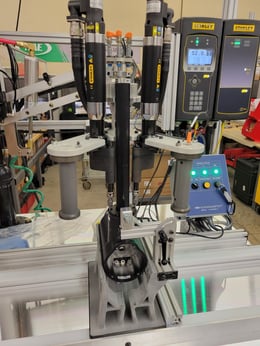 Whether it’s something complex – like heavy equipment manufacturing – or simple – like office furniture – assembly processes typically involve dozens of bolts across multiple stations.
Without standardized control, maintaining consistent torque application and fastening sequence is difficult. Add in limited operator experience and higher turnover rates, keeping high levels of product quality is downright impossible.
By combining fastening tools, intelligent positioning systems, and real-time verification technologies, manufacturers can reduce human error while improving operator safety, productivity, and consistency.
What is Precision Fastening?
Precision fastening refers to the use of advanced tools and systems to apply fasteners such as bolts, screws, and nuts with exact torque, angle, and sequence requirements. These systems often include:
- Torque-controlled electric or pneumatic systems
- Automated fastening systems
- Real-time monitoring and feedback software
- Data collection and traceability features
- Calibration and validation tools
Unlike traditional fastening methods that rely on operator judgment, precision fastening systems ensure each fastener is installed to exact specifications.
>> See how the IQi Series Precision Electric Screwdriver improves fastening accuracy.
Precision Fastening vs. Guided Tooling
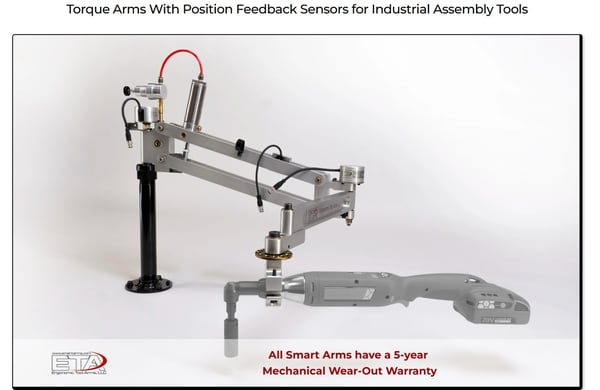
Source: Ergonomic Tool Arms (ETA)
Precision fastening and guided tooling are often used together but serve different purposes.
Precision fastening focuses on achieving exact torque and angle values on critical joints in an assembly. This level of control matters when assemblies require extremely tight tolerance or long-term structural reliability.
Guided tooling, on the other hand, refers to smart assembly systems that direct operators through a predefined sequence of assembly steps while verifying each step is completed correctly.
Where precision fastening is focused on exact torque and angles, guided tooling focuses on error-proofing the process itself to ensure:
- The correct fastener is used
- The correct sequence is followed
- The correct tool is applied
- Each step is verified before operator moves on
Precision fastening guides how a fastener is installed while guided tooling ensures the process is executed correctly for repeatable results.
Why Manufacturers Are Using Precision Fastening in Complex Assembly
Precision fastening solutions bring reliability, control, and intelligence to one of the most fundamental processes on the entire production line.
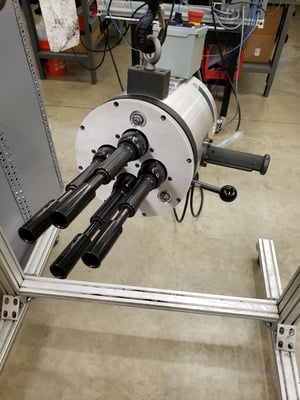 Improved Torque and Angle Control
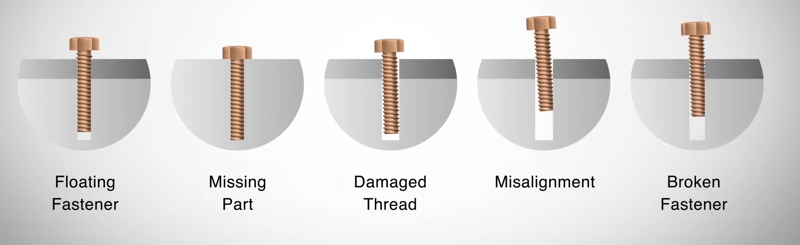
At its core, precision fastening eliminates variability and error. Manual fastening can lead to under-tightening (leading to loose joints) or over-tightening (causing material damage or fastener failure).
Precision fastening applies the exact torque and angle required for proper clamping force, structural integrity, and compliance with engineering specifications.
Increased Efficiency and Reduced Cycle Time
Time is money on the production floor. Precision fastening directly affects operations by reducing rework, minimizing inspection time, and eliminating redundant steps. Ergonomic tools reduce operator fatigue while automated systems enable faster and more consistent cycle times.
The result is a smoother workflow with greater throughput, fewer bottlenecks, and less rework.
Enhanced Safety
Improper fastening causes more than quality issues. Failures caused by incorrect torque can lead to equipment malfunction, product recalls, and workplace injuries.
Precision fastening mitigates these risks by ensuring each joint meets standards, alerting operators of errors or deviations, and preventing tool misuse through programmed limits.
Consistency Across Production
Consistency is one of the biggest challenges in manufacturing, especially with multiple operators or shifts. Precision fastening offers repeatable results regardless of operator skill level, processes, and variability.
Data Verification and Regulatory Compliance
When data tracking is incorporated into the organization’s MES, manufacturers gain:
- Full traceability and verification of every fastening operation
- Detailed records for audits and regulatory compliance
- Immediate visibility into process deviations
- Ability to identify and correct issues before they leave the line
Faster Employee Onboarding
As experienced employees retire, manufacturers face a growing skills gap. Precision fastening systems reduce reliance on operator expertise by embedding process knowledge into the tooling itself. With guided instructions, sensors, automated verification, and pass/fail feedback, new employees can quickly get up to speed while maintaining high quality standards.
Solutions like MCE's socket trays, precision-machined sockets organized with integrated sensors and visual indicators, remove guesswork. Socket trays tie socket selection to tool behavior to support better quality, safety, and throughput.
.jpg?width=460&height=345&name=Image%203.5%20Socket%20Tray%20Image%20(1).jpg)
Socket Tray
Precision Fastening Use Cases in Complex Manufacturing and Assembly
Use Case: Replacing Manual Torque Verification
An MCE customer rebuilds diaphragm pumps and was using a drill to manually drive 40 fasteners, followed by a separate torque wrench to verify specifications.
The MCE automation team worked with them to identify the right automated solution for their production needs. We landed on a precision fastening tool that would drive the fastener, automatically verify torque, and provide a pass/fail green-light indicator.
Results: Not all automated investments have to be big ones. This simple, yet effective automated solution delivered immediate operational impact:
- Reduction in fastening time
- Significant cycle-time improvement
- Removal of redundant process steps
- Improved documentation and traceability
- Reduced risk of missed specifications
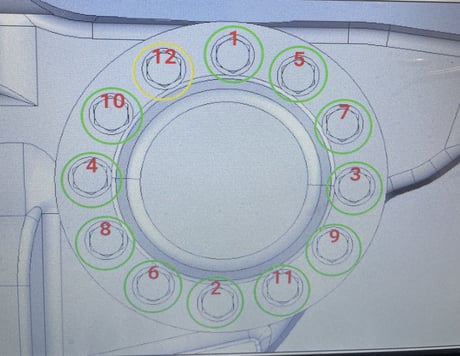 Use Case: Precision Fastening as Part of a Guided Tooling System
In another case, an operator was fastening 12 bolts on a tractor flange. Each bolt required precise torque and a strict tightening sequence. Any deviation in that process could result in flange misalignment and potential failure.
A guided tooling system integrated with precision fastening solved this issue and error-proofed the operator’s steps.
- Controlled torque tools
- Positioning systems and interlocks
- Visual work instructions
- Vision verification systems
The system ensured bolts were tightened in the correct order and prevented the operator from advancing until all requirements were met. The result was improved reliability and reduced process variability.
MCE’s Air Automation Engineering Fastening Products
Precision Tooling + Manufacturing Execution Systems
One of the biggest advantages of precision fastening is its integration into smart manufacturing execution systems (MES). MES platforms track parts throughout the entire production process, from raw materials to finished goods.
Through open communication protocols and controller interfaces, fastening data such as torque values, rotation angles, and completion status can be transmitted directly to the MES.
Why this matters:
- Full traceability of fastener installation
- Real-time production monitoring
- Immediate detection of any process deviations
- Data-driven process optimization and decision making
Instead of reacting to quality issues, manufacturers can proactively prevent them.
Eliminating Bottlenecks with Intelligent Tool Tracking
Advanced tool tracking systems monitor tool position, usage, and sequence in real time. Air Automation Engineering (AAE), an MCE company, developed a custom tool tracker solution to address the specific needs of assembly stations.
By integrating torque arms, sensors, and controller interfaces, manufacturers can:
- Ensure correct tool use at each station
- Prevent out-of-order sequences
- Reduce downtime caused by errors or rework
- Improve ergonomics and operator efficiency
We work with major tool and assembly manufacturers like Stanley, Ingersoll-Rand, FIAM, GCI Engineered Solutions, and Ergonomic Tool Arms (ETA), and ASG. We can customize solutions to ensure correct torque application and sequence.
MCE Industrial Assembly Tools & Precision Fastening Services and Solutions
Looking for assembly solutions to help your operation run more efficiently while maintaining accuracy requirements?
MCE supports a wide variety of tools and technologies for precision fastening, including:
- Electric torque tools with programmable settings
- Pneumatic torque tools for high-speed, high-volume applications
- Battery-powered smart tools for flexible, connected assembly stations
- Multi-spindle systems for simultaneous fastening of multiple joints
- Torque arms for manual positioning capability and ergonomic reaction support
- Controllers and software platforms for data collection, analysis, and integration
Schedule a consultation today.
Selecting the right combination depends on your application’s needs, complexity, accuracy requirements, and production volume.
We work with plant engineers to understand your manufacturing challenges and objectives for precision, cycle time, and consistency. We'll help you identify bottlenecks, evaluate manual processes, and account for constraints such as space, budget, and compliance.