


Selecting the right hydraulic hose is critical to equipment performance, service life, and safety. A hose may appear to fit the machine, but that does not mean it is correct for the pressure, temperature, fluid, routing, fittings, movement, abrasion, or operating environment.
Hydraulic hose selection should start with the full application, not just the hose size. Media compatibility, working pressure, temperature range, bend radius, abrasion resistance, flexibility, fitting compatibility, certifications, and supplier support can all affect how long the hose performs and how safely the system operates.
MCE supports hydraulic hose, fluid connectors, fittings, and hose assembly applications with product knowledge, technical support, and access to Parker hose and fitting solutions.
How Do You Select the Right Hydraulic Hose?
Select a hydraulic hose by reviewing the application requirements, working pressure, temperature, fluid compatibility, bend radius, abrasion exposure, fitting compatibility, applicable standards, and safety requirements.
The main selection criteria are:
- Application and system requirements
- Working pressure and pressure spikes
- Temperature range
- Fluid and media compatibility
- Bend radius, routing, and flexibility
- Abrasion resistance and hose cover selection
- Approved fittings and hose assembly compatibility
- Standards, certifications, service, and support
Hydraulic Hose Selection Criteria at a Glance
| Selection Area | What to Review | Why It Matters |
|---|---|---|
| Application | Equipment type, duty cycle, routing, motion, environment, and installation space | The hose must fit the real operating conditions, not only the line size. |
| Pressure | Working pressure, pressure spikes, and required safety margin | Incorrect pressure selection can shorten service life and create safety risk. |
| Temperature | Fluid temperature, ambient temperature, heat exposure, and cold-start conditions | Temperature affects hose materials, flexibility, cover life, and fluid performance. |
| Media compatibility | Hydraulic oil, biodegradable oil, chemicals, additives, and cleaning exposure | The hose tube and materials must be compatible with the fluid being conveyed. |
| Bend radius | Routing space, machine movement, hose flexibility, and minimum bend requirements | Bending a hose too tightly can reduce performance and service life. |
| Abrasion | Rubbing, vibration, movement, exposure, and cover compound options | Abrasion damage can expose reinforcement and lead to premature failure. |
| Fittings | Approved fitting series, crimp specifications, assembly method, and compatibility | Hose and fittings should be matched and approved for joint use. |
| Standards and support | EN, ISO, application certifications, supplier availability, testing, and technical support | Standards, quality control, and support help improve reliability and replacement planning. |
Why Hydraulic Hose Selection Matters
Hydraulic hoses are often used under demanding conditions, including temperature fluctuations, vibration, motion, pressure changes, different installation situations, and tight routing constraints. Minimum performance parameters are defined in EN and ISO standards, but real applications may require performance beyond the minimum standard.
The correct hose can help improve service life, reduce costly replacements, limit production downtime, and reduce the chance of complaints or recurring failures.
Supplier selection also matters. Leading suppliers can provide product availability, after-sales service, technical design support, research and development, quality testing, and support for continuous product improvement.
8 Hydraulic Hose Selection Criteria
1. Application and System Requirements
Start with the application. A hydraulic hose should be selected around where it will be used, how it will move, what it will carry, and what conditions it will experience.
Review:
- Equipment type and function
- Hydraulic circuit requirements
- Installation location
- Machine movement and vibration
- Routing space and hose length
- Exposure to abrasion, chemicals, moisture, heat, cold, or UV
- Maintenance access
- Required standards or certifications
Product selection and sizing should account for the equipment design, the hose manufacturer’s guidance, and the supplier’s application support.
2. Working Pressure and Pressure Spikes
Working pressure is one of the most important hydraulic hose selection factors. The hose must be rated for the system’s operating pressure and appropriate for the pressure conditions it will experience.
When selecting a hose, review:
- Normal operating pressure
- Maximum working pressure
- Pressure spikes or impulse conditions
- Pressure drop through the hose assembly
- Hose series and reinforcement type
- Fitting and assembly pressure ratings
Do not select a hose only by inside diameter or what appears to fit. The complete assembly, including the hose and fittings, must be suitable for the pressure and application.
3. Temperature Range
Temperature affects hose performance, flexibility, cover life, reinforcement, and fluid compatibility. Review both the hydraulic fluid temperature and the ambient temperature around the hose.
Consider:
- Minimum and maximum fluid temperature
- Ambient heat or cold
- Heat from engines, exhaust, furnaces, or process equipment
- Cold-start conditions
- Outdoor exposure
- Effect of temperature on the fluid and hose materials
A hose that performs well in one environment may not be appropriate in another if temperature conditions change.
4. Fluid and Media Compatibility
Media compatibility is critical. Not every hose material is suitable for every fluid or application.
Compatibility with mineral-based hydraulic oils may be sufficient for some systems, but other applications may require compatibility with biodegradable oils, specialty fluids, additives, chemicals, or cleaning exposure.
Before selecting a hydraulic hose, confirm compatibility between the hose tube, cover, fittings, seals, and the media used in the system. Expert guidance is especially helpful when fluids, temperatures, or operating environments change.
5. Bend Radius, Routing, and Flexibility
Bend radius is increasingly important in hydraulic hose selection, especially where equipment design requires compact routing, reduced size, lower weight, or tighter installation spaces.
A smaller bending radius can support tighter installation layouts without forcing the hose to become a design constraint. However, the hose still must be routed within the manufacturer’s minimum bend radius requirements.
When reviewing bend radius and routing, consider:
- Minimum bend radius
- Installation space
- Machine movement through the full operating cycle
- Hose twist, tension, and rubbing points
- Weight and flexibility
- Clamp and support placement
- Protection from abrasion or pinch points
Reducing hose weight can also be valuable in some machine designs. High-quality compounds may allow the cover to be made thinner while still supporting durability and protection.
Watch Parker’s video on bend radius.

Bend radius graphic
6. Abrasion Resistance and Hose Cover Selection
A high-quality hose cover is important for reliability, especially in dynamic applications where hoses are exposed to movement, vibration, rubbing, or contact with surrounding equipment.
Different cover compounds may be appropriate for different application demands. A harder or more advanced cover compound may be appropriate for demanding applications, while a standard rubber cover may be suitable for less severe conditions.
Review abrasion risk from:
- Moving equipment
- Frame contact
- Sharp edges
- Vibration
- Other hoses or cables
- Dirt, debris, and outdoor exposure
- High-use service areas
Not every manufacturer offers the same hose series in all cover variants, so cover selection should be part of the full hose selection process.
7. Approved Fittings and Hose Assembly Compatibility
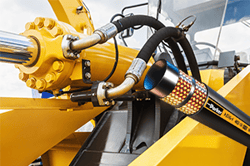
Hydraulic hose and fittings should be precisely matched and approved for joint use. This helps make the connection secure, reliable, and leak-resistant.
Using unapproved or mismatched fittings can create risk even when the parts appear to connect. The fitting, hose, crimp specification, assembly equipment, and manufacturer guidance should all align.
Review:
- Approved fitting series
- Hose-to-fitting compatibility
- Crimp specifications
- Assembly equipment requirements
- Seal and adapter compatibility
- Pressure and temperature ratings for the complete assembly
- Inspection and replacement requirements
Parker hydraulic hose connection
8. Standards, Certifications, Service, and Supplier Support
A hose should not be treated as a simple catalog item when the application is demanding. Technical support, availability, quality testing, standards compliance, and after-sales support can all affect long-term reliability.
Review whether the supplier can support:
- Engineering and technical design questions
- Application-specific certifications and standards
- Global or regional product availability
- Hose and fitting compatibility guidance
- Custom solution support where needed
- Quality testing and production consistency
- Replacement planning and field support
Price matters, but the lowest-cost hose may not reduce total cost if it leads to repeat failures, downtime, safety concerns, or difficult replacement planning.

Hydraulic hose routing example
Hydraulic Hose Safety Considerations
Hydraulic systems operate under pressure, so hose selection, assembly, installation, inspection, and replacement should be handled carefully.
Safety considerations include:
- Use hoses and fittings rated for the application
- Follow manufacturer assembly and crimp specifications
- Route hoses to avoid twisting, rubbing, stretching, or excessive bending
- Protect hoses from abrasion, heat, and sharp edges
- Inspect hoses for cover damage, leaks, corrosion, swelling, cracks, and exposed reinforcement
- Relieve system pressure before inspection, repair, or replacement
- Replace damaged or questionable hose assemblies instead of trying to reuse unsafe components
- Train employees on hose handling, inspection, and replacement procedures
Hydraulic hose failure can create downtime, equipment damage, environmental concerns, and serious injury risk. A selection process that includes pressure, compatibility, routing, fittings, and safety can help reduce those risks.
Hydraulic Hose Selection Checklist
Before selecting or replacing a hydraulic hose, confirm:
- Equipment and application
- Hose size and required flow
- Working pressure and pressure spikes
- Temperature range
- Hydraulic fluid or media compatibility
- Bend radius and routing requirements
- Abrasion and environmental exposure
- Compatible fittings and crimp specifications
- Movement, vibration, and installation constraints
- Applicable EN, ISO, or application-specific standards
- Maintenance and inspection requirements
- Supplier support and product availability
Parker 462 EVO Hydraulic Hose Example
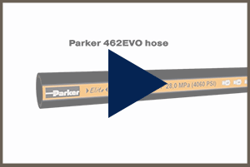
The original Parker source used the 462 EVO hose series as an example of a hydraulic hose designed for durability, compactness, and improved performance.
According to the source material, Parker’s 462 EVO hose offers 67% longer service life than the previous model and a smaller bending radius. The hose is available in multiple cover options, including a Super Tough cover that Parker states offers 450 times greater abrasion resistance than the classic rubber cover.
The no-skive 462 EVO hose series is listed for pressure and temperature resistance up to 425 bar / 42.5 MPa at -40°C to 100°C. The source material also notes that the hose exceeds EN857-2SC and ISO 11237 type 2SC, and can be used with matching 48 series hose fittings.
Parker 462 EVO hose
For more information on this hose series, visit Parker’s product page for Medium Pressure Parkrimp No-Skive Hose 462/ST/TC - EN 857 2SC - ISO 11237.
Get Hydraulic Hose Selection Support from MCE
MCE can help customers evaluate hydraulic hose applications, review compatibility requirements, select Parker hoses and fittings, and support fluid connector needs across industrial and mobile equipment applications.
MCE fluid power and hose support includes:
- Hydraulic hose and fitting selection
- Fluid connector and hose assembly support
- Pressure, temperature, and compatibility review
- Bend radius and routing considerations
- Abrasion and cover selection support
- Hose, fitting, and crimping equipment guidance
- Replacement and maintenance planning
Explore MCE fluid connectors and hose solutions or contact MCE to discuss your hydraulic hose application.