


Safety rod locking cylinders help hold a pneumatic cylinder in position when compressed air pressure is lost. By mechanically locking the piston rod, they can reduce the risk of uncontrolled movement, falling loads, equipment damage, and process disruption.
In automated equipment, the loss of electrical power, hydraulic pressure, or compressed air can create an immediate safety concern. Pneumatic systems are especially vulnerable when a pressure drop, compressor failure, broken hose, or major leak removes the force that normally controls an actuator.
Where an application requires the cylinder rod or attached load to remain in position during an air-supply failure, a rod locking cylinder may be part of the safety strategy.
What Does a Safety Rod Locking Cylinder Do?
A safety rod locking cylinder uses a mechanical locking device to grip the piston rod when signal pressure is removed.
This can help:
- Hold a load in position during compressed-air loss
- Reduce uncontrolled cylinder movement
- Protect operators and nearby personnel
- Reduce the risk of damage to machinery and products
- Support safer restart, maintenance, and emergency-stop conditions
Why Pneumatic Cylinder Safety Matters
In a pneumatic system, movement depends on maintaining adequate compressed-air pressure. A major pressure drop can allow a cylinder to move unexpectedly, especially when the actuator is supporting a vertical load or resisting an external force.
Possible causes of pressure loss include:
- Compressor or air-supply failure
- Broken or disconnected tubing
- A significant leak in the supply line
- Valve or control failure
- Emergency shutdown or loss of electrical power
The consequences depend on the machine and application, but may include a suspended load dropping, tooling shifting, a workpiece moving out of position, or an actuator traveling unexpectedly.
Rod locking cylinders are designed to help control that risk by mechanically holding the piston rod when air pressure is no longer available.
How Rod Locking Cylinders Work
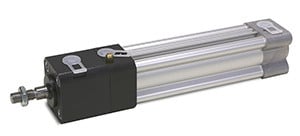
Parker P1F Series rod locking cylinders are designed to help hold loads in position when compressed-air pressure is lost.
The locking function is provided by a mechanical cartridge through which the piston rod passes. When signal pressure is present, the locking mechanism remains released and the cylinder can move normally.
When signal pressure is removed, internal springs activate the locking mechanism. The mechanism clamps onto the piston rod and holds it in position.
Parker rod locking cylinders use air release and spring engagement, with the locking device integrated into or mounted directly to the cylinder assembly. This can reduce installation space and simplify system design.
Important Application Limitation
Rod locking performance depends on the condition of the piston rod and the specific lock design. Oil, grease, coolant, dirt, or other contamination may reduce holding performance in applications that require a dry rod surface.
Always review the manufacturer’s requirements for allowable contamination, holding force, operating pressure, mounting orientation, and engagement conditions.
Dynamic vs. Static Rod Locking Cylinders
Parker supplies 2 primary rod-locking cylinder designs:
- P1F-L for dynamic applications
- P1F-H for static applications
| Rod Lock Type | When It Engages | Typical Use | Key Consideration |
|---|---|---|---|
| Dynamic | May engage while the rod is moving, within the manufacturer’s stated limits. | Applications that require emergency braking and holding. | The allowable speed, load, stopping distance, and number of emergency stops must be reviewed. |
| Static | Engages only after the piston rod has stopped moving. | Applications that require a stationary rod or load to remain securely held. | Engaging the lock while the rod is moving may damage the locking jaws. |
Dynamic Rod Locking Cylinders
Dynamic rod locking cylinders may be used in applications where the lock must engage while the piston rod is still moving. Within the stated operating limits, the locking mechanism acts as an emergency brake before holding the rod in position.
In the Parker P1F-L design, loss of signal pressure allows high-force springs to move an internal piston axially. The conical shape of the mechanism converts that axial movement into radial clamping force.
Precision steel balls transfer the force to hardened clamping sleeves, which press against the piston rod with a stable holding force.
The sleeve surface includes a grooved pattern intended to improve grip, including in conditions where the rod may be exposed to limited oil, grease, dirt, liquid, or other contamination.
When Dynamic Rod Locks Are Used
Dynamic rod locking cylinders may be considered when:
- A moving load must be stopped during an emergency
- Compressed-air loss could allow uncontrolled actuator travel
- A vertical or inclined load must be prevented from falling
- The application requires both braking and load holding
- Actuator movement could create a hazard for people, tooling, or products
Dynamic stopping capability should not be assumed. The cylinder, rod lock, load, speed, pressure, and system controls must all be evaluated against the manufacturer’s ratings.
Static Rod Locking Cylinders
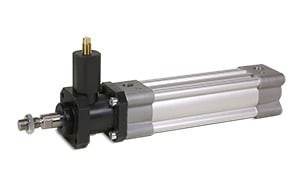
Parker P1F-H static rod locking cylinders are designed to hold a stationary piston rod after movement has stopped.
Static rod locking cylinders are designed to engage only when the piston rod is stationary and signal pressure has been removed.
The rod lock unit is typically mounted on the front end cover of the cylinder. The piston rod passes through a transverse locking cartridge.
When signal pressure is removed, internal springs activate an over-center mechanism that forces locking jaws against the rod. The jaws then hold the rod and attached load in position.
When Static Rod Locks Are Used
Static rod locking cylinders may be considered when:
- A load must remain stationary after the cylinder has stopped
- The application requires load holding during an air-supply interruption
- Maintenance or process conditions require a cylinder position to be retained
- The rod can be brought to a complete stop before the lock engages
Static Lock Engagement Warning
The piston rod must be stationary before a static rod lock engages. If the locking jaws contact a moving rod, the jaw edges may be damaged and holding performance may be reduced.
How Rod Locking Cylinders Help Protect People and Equipment
Personnel Protection
A rod lock can help reduce the risk of unexpected actuator movement in areas where operators, maintenance employees, or other personnel may be exposed to moving equipment.
Load Holding
When a pneumatic cylinder supports a vertical or suspended load, loss of air pressure may allow gravity to move the load. A properly selected rod lock can mechanically hold the rod and reduce that risk.
Equipment Protection
Unexpected movement can damage tooling, fixtures, machine frames, sensors, workpieces, and connected equipment. Holding the cylinder position may help limit secondary damage after a pressure loss.
Process Reliability
Maintaining the position of a cylinder can help preserve alignment, part location, and process stability during an interruption. This may support a safer and more controlled restart.
Where Safety Rod Locking Cylinders Are Commonly Used
Rod locking cylinders may be used in pneumatic applications such as:
- Vertical lifting and positioning systems
- Clamping and fixture applications
- Assembly and material-handling equipment
- Machine guarding and access systems
- Packaging and processing machinery
- Automated production equipment
- Applications with suspended tooling or loads
- Systems where actuator position must be maintained during air loss
What to Consider When Selecting a Rod Locking Cylinder
Rod locking cylinders should be selected as part of the complete pneumatic and machine-safety design.
Review:
- Required holding force: Confirm that the lock is rated for the load and application orientation.
- Dynamic or static operation: Determine whether the lock must stop a moving rod or only hold it after motion stops.
- Cylinder bore and rod size: Match the lock and actuator dimensions to the application.
- Operating pressure: Verify the pressure required to release the lock and operate the cylinder.
- Rod condition: Confirm allowable lubrication, contamination, and surface requirements.
- Mounting and available space: Review the integrated or flange-mounted configuration.
- Control sequence: Make sure the lock releases and engages in the correct order relative to cylinder motion.
- Emergency-stop requirements: Evaluate the entire safety function, including valves, controls, sensors, and guarding.
- Inspection and maintenance: Establish procedures for testing the locking function and checking rod condition.
Rod Locks Are One Part of the Safety System
Rod locking cylinders should not be treated as the only safety component in an application. They are commonly intended for emergency holding or braking rather than normal, repetitive stopping.
Planned braking, controlled deceleration, guarding, safe exhaust, pressure monitoring, redundant controls, and other safety measures may also be required.
The complete machine design should be reviewed against the applicable risk assessment, safety standards, and manufacturer instructions.
Improve Pneumatic Cylinder Safety with MCE
MCE supports pneumatic cylinder and actuator applications with product selection, sizing, system review, and technical support.
We can help evaluate:
- Dynamic and static rod locking cylinder options
- Holding-force and load requirements
- Pneumatic cylinder sizing and mounting
- Air-loss and emergency-stop conditions
- Valves, controls, sensors, and related pneumatic components
- Replacement and retrofit requirements
Need help selecting a safety rod locking cylinder or reviewing a pneumatic load-holding application? Contact MCE to discuss the equipment, load, operating conditions, and safety requirements.