


The right steam trap removes condensate and non-condensable gases without allowing valuable steam to escape. Choosing the wrong trap can contribute to poor heat transfer, water hammer, higher energy use, equipment damage, and increased maintenance.
Steam trap selection should be based on the application, operating pressure, condensate load, temperature, air-venting requirements, installation environment, and maintenance needs. Mechanical, thermodynamic, and thermostatic steam traps each operate differently and are better suited to certain parts of a steam system.
How Do You Choose the Right Steam Trap?
Choose a steam trap by matching its operating principle and discharge characteristics to the application.
- Mechanical traps are commonly used where condensate must be removed continuously, including steam-using equipment and distribution lines.
- Thermodynamic disc traps are compact and well suited to steam main drainage, tracing, and certain high-pressure applications.
- Thermostatic traps respond to temperature and are commonly used for air venting, tracing, and applications where some condensate subcooling is acceptable.
Continue below for a comparison of steam trap types and the operating factors that should guide final selection.
What Is a Steam Trap?
A steam trap is an automatic valve that removes condensate and non-condensable gases from a steam system while minimizing the loss of live steam.
Condensate forms as steam releases heat and changes back into water. If condensate is not removed effectively, it can reduce heat transfer, restrict steam flow, contribute to corrosion, and increase the risk of water hammer.
A properly selected steam trap helps:
- Remove condensate at the required rate
- Release air and other non-condensable gases
- Reduce unnecessary steam loss
- Support consistent equipment performance
- Improve steam system efficiency
- Reduce the risk of water hammer and equipment damage
Steam Trap Types Compared
| Steam Trap Type | How It Operates | Common Applications | Selection Considerations |
|---|---|---|---|
| Mechanical | Responds to the difference in density between steam and condensate. | Steam-using equipment, steam mains, drip service, and high-temperature tracing | Often selected when continuous condensate discharge and rapid response are important. |
| Thermodynamic | Uses the pressure and velocity differences between steam and condensate to open and close a disc. | Steam main drainage, tracing, drip service, and certain high-pressure applications | Compact and durable, but performance can be affected by surrounding temperature and weather conditions. |
| Thermostatic | Opens and closes in response to temperature. | Air venting, tracer lines, and applications where condensate subcooling is acceptable | Effective for air removal and energy conservation, but may allow condensate to remain in the line until it cools. |
How to Select a Steam Trap
1. Identify the Application
The first step is determining where the trap will be installed and what it must accomplish.
Common steam trap applications include:
- Steam main drainage
- Process heating equipment
- Heat exchangers
- Coils and unit heaters
- Tracing systems
- Drip legs
- Air-venting points
A trap that works well on a steam distribution line may not be the best choice for process equipment with a rapidly changing condensate load.
2. Determine the Condensate Load
The trap must be able to discharge the expected condensate load under actual operating conditions. Selection should account for both normal operation and startup, when condensate loads may be significantly higher.
Consider:
- Normal operating condensate load
- Startup load
- Required safety factor
- Available differential pressure
- Whether the load is steady or variable
3. Confirm Operating Pressure and Temperature
Verify the steam pressure, condensate return pressure, operating temperature, and maximum allowable pressure for the application.
The available differential pressure across the trap affects discharge capacity. A trap should not be selected based only on the upstream steam pressure.
4. Evaluate Air-Venting Requirements
Air and other non-condensable gases can slow startup and reduce heat transfer. Applications that require rapid startup or consistent heating may benefit from a trap with strong air-venting performance.
Thermostatic elements are commonly used for air venting because they remain open while the system is cold and close as steam temperature is reached.
5. Consider the Discharge Pattern
Steam traps may discharge condensate continuously or intermittently.
- Continuous discharge can help maintain stable heat transfer and reduce condensate buildup.
- Intermittent discharge may be acceptable for steam main drainage, tracing, and other applications where cycling does not affect equipment performance.
6. Review Installation Conditions
Installation position, available space, weather exposure, freezing risk, vibration, and access for maintenance can all influence trap selection.
Review:
- Horizontal or vertical installation requirements
- Available piping space
- Outdoor exposure
- Freezing conditions
- Accessibility for inspection and replacement
- Presence of dirt, scale, or other debris
7. Consider Maintenance and Testing
The trap should be accessible for inspection, testing, cleaning, and replacement. Steam trap selection should also account for the facility’s maintenance capabilities and preferred testing methods.
Standardizing trap types where practical may simplify spare-parts inventory, technician training, and ongoing maintenance.
Mechanical Steam Traps
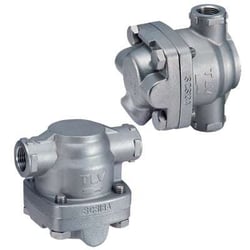
Mechanical steam traps respond to the difference in density between steam and condensate. A float or bucket moves as condensate enters the trap, opening or closing the discharge valve.
Free Float Steam Traps
Free Float steam traps are commonly used on steam-using equipment, steam distribution lines, and high-temperature tracing applications.
Potential advantages include:
- Continuous condensate discharge
- Reduced condensate buildup
- Improved heat-transfer surface utilization
- A water seal that helps reduce steam loss through the discharge orifice
- Reduced localized valve wear
- Protection from certain external environmental conditions
Inverted Bucket Steam Traps
Inverted bucket traps use an internal bucket that rises and falls in response to steam and condensate.
Selection considerations include:
- Air discharge may be limited by the vent hole.
- Response can be slower than a Free Float design.
- A water seal must be maintained for proper operation.
- Freezing conditions can create additional risk if condensate remains in the trap.
Thermodynamic Disc Steam Traps
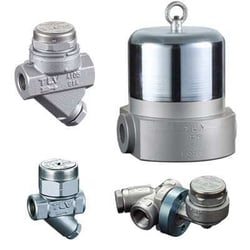
Thermodynamic disc steam traps use the pressure and velocity characteristics of steam and condensate to control a disc.
They are commonly selected because they are compact and can operate across a wide pressure range.
Common applications include:
- Steam main drainage
- Drip service
- Steam tracing
- Light process applications
- Certain high-pressure steam applications
Selection considerations include:
- Compact construction
- Resistance to freezing damage
- Suitability for high-pressure service when properly rated
- Potential sensitivity to rain, cold air, and other environmental conditions
Thermostatic Steam Traps
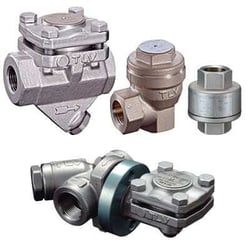
Thermostatic steam traps open and close based on temperature. Common designs include bimetallic, balanced-pressure, and expansion-type traps.
They are commonly used for:
- Air venting in steam systems
- Steam tracing
- Applications where condensate subcooling is acceptable
- Applications where reduced discharge temperature can support energy conservation
Because thermostatic traps may hold condensate until it cools below steam temperature, they are not the best fit for every heat-transfer application.
How Steam Traps Work
- Mechanical traps open and close as a float or bucket changes position in response to condensate.
- Thermostatic traps respond to the temperature difference between steam and cooler condensate or air.
- Thermodynamic traps operate using pressure and velocity changes that act on a disc.
Signs of a Failed Steam Trap
A steam trap may fail open, fail closed, leak, or operate inconsistently. Common warning signs include:
Excess Pressure or Temperature in the Condensate Return Line
Higher-than-expected pressure or temperature in the return line may indicate that a trap has failed open and is allowing live steam into the condensate system.
Water Hammer
Water hammer may result from condensate accumulation, poor drainage, or steam entering a condensate return line. It can create noise, vibration, piping stress, and equipment damage.
A Cold Trap or Cold Downstream Piping
A trap that remains cold during operation may have failed closed or become blocked. This can cause condensate to back up in the steam line or equipment, reducing heat transfer and increasing the risk of water hammer.
Unusually High Steam Use
A failed-open or leaking trap can waste steam and increase energy consumption without creating an obvious visible leak.
How to Test a Steam Trap
Steam traps are commonly evaluated using ultrasonic testing and temperature measurements.
- Ultrasonic testing helps technicians evaluate flow and operating patterns inside the trap.
- Temperature testing helps compare inlet, outlet, and return-line conditions.
- Visual inspection can identify leaking connections, damaged piping, corrosion, and installation problems.
- System-level review can identify recurring pressure, condensate, or return-line issues that are not caused by the trap alone.
The TLV TrapMan system can use ultrasonic and temperature readings to help categorize trap condition and estimate leakage.
Improve Steam System Efficiency with MCE
Steam trap selection is only one part of maintaining an efficient and reliable steam system. Proper sizing, installation, testing, condensate removal, pressure control, and maintenance all affect system performance.
MCE can support steam and flow control applications with:
- Steam trap selection and application support
- Flow control valves and related components
- Condensate and steam system products
- Replacement and maintenance planning
- Technical support for new and existing applications
Need help comparing steam trap types or selecting a trap for a specific application? Contact an MCE flow control specialist to discuss your steam system, operating conditions, and condensate-removal requirements.