


Have legacy damper drives that still work?
Even though your equipment is still operational, years of wear and stress can have a profound impact on accuracy, fuel efficiency, control loop stability, and overall performance.
Many facilities, especially power plants, manufacturing sites, and large processing operations, rely on damper drives to precisely control airflow. This component in the control system is essential for efficient combustion, reduced emissions, and optimal fuel use.
One of the most established names is the Bailey Damper Drive, which is part of the ABB product family.
What Is a Damper Drive or Damper Actuator?
A damper drive or actuator is a motor-driven device inside a duct or airflow path that regulates how much air or gas flows through.
The damper drive is an industrial, high-torque specialized actuator that moves the damper. Damper drives precisely control the position of air dampers, fan inlet vanes, or valves to regulate or restrict airflow in harsh power plants or utility environments. Proper damper drives ensure combustion systems, fans, and ventilation systems receive the correct amount of air, helping plants stay efficient, stable, and safe.
Costs of Not Replacing Older Bailey Damper Drives
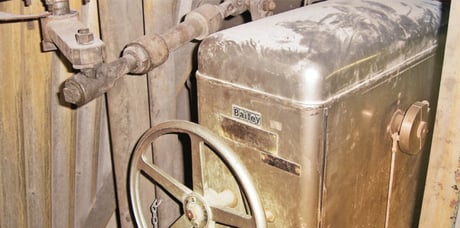 According to ABB, modern damper drive solutions can save fuel costs and improve boiler or combustion efficiency when compared with decades-old installations, especially in facilities where air control directly impacts heat rate.
Outdated damper drives can work for years, sometimes decades, but ignoring their age and performance limitations can result in unexpected costs across your organization.
Air-to-Fuel Ratio: Lower Combustion Efficiency and Higher Fuel Costs
Damper drives control the volume of air delivered to combustion systems such as boilers and furnaces. When older units wear out over time:
- Gears loosen and linkage becomes unpredictable
- Airflow control is less accurate
- The air-to-fuel ratio drifts from optimal
This imbalance forces plants to burn more fuel to achieve the same heat output, increasing fuel expense. Even a small inefficiency in air-to-fuel ratio can add up quickly in large systems.
The result is higher fuel bills, lower heat rates, and reduced overall plant efficiency.
Increased Emissions and Environmental Penalties
Precise airflow control supports clean combustion. When dampers fail to regulate airflow accurately, combustion becomes less complete. Poor combustion leads to:
- Higher carbon, nitrous oxides, and unburned carbon emissions
- Potentially exceeding regulatory emissions limits
- Risk of fines or increased monitoring costs
In regulated facilities, emissions compliance has major environmental and financial consequences.
More Frequent Maintenance and Unplanned Downtime
Older drives are more prone to wear-related issues such as:
- Gear slip
- Positioner inaccuracies
- Increased need for mechanical adjustments
These issues often require unscheduled inspections or repairs, pulling operators off other tasks and increasing labor costs. The result includes higher maintenance labor, unplanned (and expensive) outages, and more frequent service calls.
Reduced Control System Performance
Modern control systems depend on accurate feedback and precise actuator response:
- Worn drives produce inconsistent position feedback
- Control loops oscillate or hunt
- Automation systems struggle to maintain setpoints
This undermines the performance of controllers such as PLC-based control loops. This can lead to poor process stability, more manual tuning or overrides, and a higher risk of trips.
Lost Opportunity from Slow Upgrades
Because older Bailey units are mechanical and often lack digital position sensing or integration, they can’t take advantage of:
- Condition diagnostics
- Predictive maintenance
- Integrated automated communication
This delays the transition to smarter, data-driven maintenance strategies that save time and cost. It also results in fewer insights into asset health, more reactive rather than proactive maintenance, and fewer optimization opportunities.
Help your engineers and operators focus on the process, not the problem.
Talk to an MCE instrumentation and process control expert today.
Upgrade Your Bailey Damper Drives with ABB and MCE
Bailey Damper Drives are legends in durable and precise airflow solutions in boilers, power plants, and combustion systems. Some Bailey Damper Drives in use today have been operating since the 1960s.
Our manufacturer partner ABB acquired Bailey Damper Drives years ago and offers the modern version of the same system for:
- Improved accuracy and airflow control
- Better burner efficiency and reduced fuel costs
- Lower emissions through proper fuel-to-air ratios
ABB continues the legacy of Bailey Damper Drives, including pneumatic and electric models. We partner with ABB to:
- Replace older installed units directly through cross-reference compatibility
- Support diverse torque requirements with a range of actuator sizes and mounting options
- Provide flexible control options with electro-pneumatic and pneumatic positioners
If you see the Bailey name on older equipment, we can provide the successor with the same durability and longevity you’ve come to expect with updated performance you need.
ABB Damper Drives & Actuators: Upgrade Options
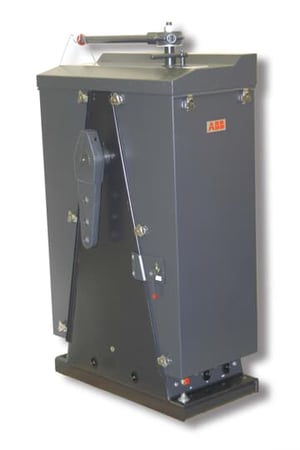 ABB’s damper drives and actuators include options that support continuous modulating control or simple on/off operations. There are also configuration operations that include advanced positioners for fine-tuned control, feedback, and diagnostics.
Modern Features and Digital Support
Building on the Bailey heritage, newer ABB damper drives are offered with smart positioners and digital control modules that provide:
- Precise positioning and tighter control loops
- Integrated feedback for system automation
- Diagnostics and condition monitoring for preventative maintenance
ABB also supports digital communication standards (such as HART or Fieldbus) to integrate damper drives with plant automation systems, making it easier to monitor position, performance, and health.
Learn more about MCE Automation Solutions.
Damper Drive Upgrades and Retrofits
Bailey Damper Drives are so durable that they remain in use in many industrial facilities even decades after original installation.
Together, MCE and ABB can replace or enhance these drives without major system redesign. Cross-reference guides and adapter kits help match newer ABB drives to existing installations, reducing the complexity of retrofits.
This makes it easier for facilities to modernize aging infrastructure while preserving existing mechanical connections and control logic.
Modernize Your Plant’s Industrial Air Flow with MCE
Failing to update older Bailey damper drives can erode efficiency, increase compliance costs, add maintenance burden, and undermine automation efforts.
Replacing worn actuators with modern damper drives helps facilities:
- Restore precise airflow control
- Improve fuel emissions
- Lower emissions
- Reduce unplanned maintenance
- Enable smarter process automation
Need process instrumentation solutions to support your complex operation?
MCE can help. Our operating companies Swanson Flo and North East Technical Sales recently expanded their partnership with ABB, so we can give you better access to high-quality instrumentation, faster support, improved delivery reliability, and a stronger local team.