


Buying grease is expensive. But disposing of it is even worse. Many plants spend more on waste grease disposal than they do on new grease purchases.
Between disposal fees, handling requirements, and contamination risks, grease waste quietly eats away at your maintenance budget. The good news? There’s a better way, and it starts with automating lubrication.
By automating lubrication processes with reliable, high-pressure valves, companies can reduce grease consumption, lower disposal costs, extend equipment life, and improve workplace safety. MCE has the expertise and specialty valves that can help your organization implement an automated lubrication plan.
The True Cost of Grease Disposal
Most plants think about the price of new grease, but few account for the much larger and often overlooked cost of disposing of used grease. In fact, while grease purchases may only represent 2–5% of a maintenance budget, disposal costs can climb as high as 20% of annual lubricant expenditures.
Disposing of used lubricant isn’t as simple as throwing it away. It comes with multiple layers of expense:
- Disposal fees: Charges for waste management collection and treatment of used grease.
- Storage and handling: Safe storage requires containers, space, and labor — all adding overhead.
- Contamination costs: Improper disposal or grease leaks can shut down production lines and create hazardous waste cleanup.
Every ounce of wasted grease not only costs money to buy, but even more to get rid of responsibly.
Why Manual Lubrication Costs More
Manual lubrication has been the industry standard for decades, but it comes with problems:
- Over-greasing: Technicians often apply more grease than necessary “just to be safe.”
- Inconsistency: Different workers may use different amounts, leading to inefficiency.
- Leaks and spills: Manual systems are more prone to leaks, turning expensive grease into hazardous floor waste.
- Downtime risk: Bearings can still run dry if lubrication is missed during shifts or weekends.
The result? More grease purchased, more grease disposed of, and more hidden costs.
How Automatic Lubrication Systems Reduce Grease Use and Disposal
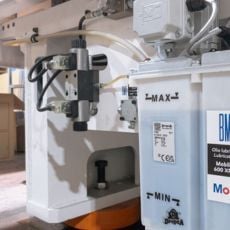 Automating lubrication not only reduces the amount of grease used but also helps avoid the high costs associated with handling, storing, and disposing of waste grease.
Automated lubrication systems (ALS) precisely control how much grease is dispensed, when, and where. The result is:
- Right amount, right time: No more over-greasing or missed lubrication.
- Consistent application: Lubrication schedules are programmed, not guesswork.
- Reduced grease usage: Some customers report reduced grease consumption by up to 90%.
- Fewer leaks and spills: Reliable valves prevent costly grease leaks that can create hazardous waste.
- Consistent production: Automated lubrication reduces costly downtime.
Less grease used = less grease to dispose of.
For Automated Lubrication, Valve Reliability Matters
When it comes to precise lubrication in complex machinery, not any valve will do.
Specialized valves used in automated lubrication systems must be highly reliable because they control when and how grease is dispensed. If a valve leaks, an entire drum or tote of grease worth thousands of dollars can be lost on the floor.
Beyond the cost, spilled grease creates serious problems: contamination, hazardous waste, cleanup costs, and production downtime.
In industries such as power plants or large-scale manufacturing, where equipment runs continuously and lubrication is critical, valves need to open and close precisely on command. They must deliver the right amount of grease to each component at the right time — no more, no less.
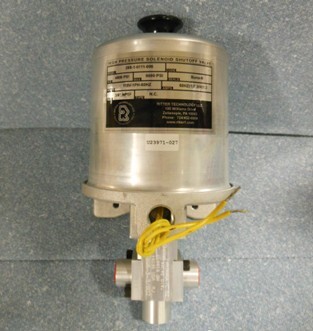 High-Pressure Solenoid Grease Valve - Class 208
For heavy-duty industrial applications, we often recommend our proprietary High-Pressure Solenoid Grease Valve - Class 208.
The 208 Valve, MCE’s proprietary solenoid valve, is a critical part of automated lubrication systems. It's designed for individual control of lubricant volume and delivery frequency to several different locations from a single pressure source.
In heavy industries, lubrication barrel pumps typically will run at a ratio of 75:1 or at 50:1, which requires either 5,000 or 7,500 PSI to pump the grease down the hitter, used to circulate lubricant effectively to bearings and other moving parts, reducing friction and wear. This is where the 208’s performance cannot be matched.
When our proprietary high-pressure solenoid grease valve is used as part of a Series Progressive Grease Systems, you can achieve higher pounds per square inch (PSI). We outperform the competition through these advantages:
- Handles grease or oil interchangeably
- Provides flow control to different locations from one pressure source
- Operates at 4000 PSI at temps to 160°

Its key advantages include:
- High Pressure Handling (Capable of operating at 4000 PSI, whereas most competitors max out at 3,000 PSI.)
- Reliability (Prevents leaks that could spill thousands of dollars’ worth of grease and create hazardous waste.)
- Integration with Central Lubrication Systems (Can be PLC-controlled for precise lubrication scheduling.)
- Durability (Designed for harsh environments with exposure to heat, moisture, and contaminants.)
- Prevention of Grease Waste & Safety Issues (Reduces grease spills, which can cause fires in steel mills or create slip hazards for workers.)
Used for bulk (utility) grease or oil systems in industrial plants for multi-zone lubrication systems on large machinery. The 208-solenoid valve for automatic high-pressure grease systems is ideal for industries including:
- Power Plants
- Cement Plants
- Paper Mills and Chipboard Production
- Steel Mills
- Quarries and Mining Applications
- Particle Board and MDF Manufacturing
- Ceiling Tile Production
In addition to the Series Progressive Grease Systems, we also offer all of these automated lubrication systems:
- Terminating Systems
- Dual Line Injector
- Single Line Injector
- Orifice
- Circulating Systems
- Circulating Oil
How MCE Helps Automate Lubrication Needs
Choosing the right valve prevents waste, protects equipment, avoids safety hazards, and keeps the production process running smoothly.
We collaborate with plant managers and engineers to design custom lubrication automation systems. Our approach includes:
- System Design & Engineering: Tailored lubrication solutions for your unique industry needs.
- Full-System Implementation: We offer grease pump sourcing, piping, valve installation, and controls integration.
- Data Monitoring & Optimization: We employ sensors to track grease usage to optimize lubrication intervals and detect issues early.
- Training & Support: We provide education for maintenance teams on system operation and maintenance.
Calculating the ROI of Automated Lubrication
Beyond cost savings, automation also improves safety by reducing slip hazards, fire risks, and worker exposure to hot, hazardous environments.
Our systems pay for themselves within 12–18 months with a 5:1 ROI due to:
- Reduced Grease Usage: A steel mill customer saved $500,000 in nine months by switching to an automated system.
- Longer Bearing Life: A paper mill customer reduced lubrication oil consumption by 90%, saving thousands annually.
- Lower Downtime Costs: Automated systems prevent unscheduled shutdowns, which can cost hundreds of thousands of dollars per hour.
>> Learn How Smarter Lubrication Cuts Costs and Downtime for Industrial Plants
✅ Want a Quick Reference?
See for yourself. Our quick comparison chart makes it easy to spot the clear advantages of automated lubrication.
👉 Get the Full Cost Comparison Here
Need a second opinion? The MCE team can walk your facility, evaluate your systems, and recommend the right solution. We’re here to help you make the smart call.